
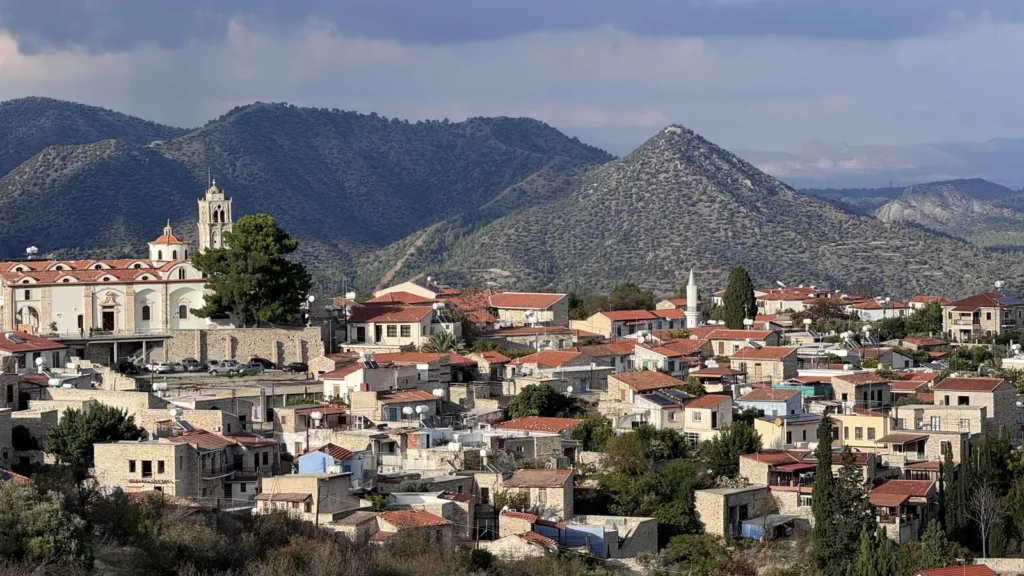
Lefkara village, in the Troodos foothills of Cyprus, is known for its lace, its stone lanes and its tavernas. We drove there from Protaras in early November, spent about five hours, and would go again. This is how the day went, what it cost, where we parked and what we would tell a friend before they go.
Transparency note: we paid for everything ourselves, including lunch. At the taverna we chatted with the owner’s son, and the family gave us a few peppers from their garden. Mrs Eleni, a lace maker we met, agreed to be mentioned and photographed.
In short
- Where: Pano Lefkara, Larnaca district. 1 hour 5 minutes from Protaras via the A3, about 40 km from Larnaca.
- Park: two free car parks just above the town hall.
- See: stone lanes, women making Lefkaritika lace, and the terrace by the Holy Cross church.
- Eat: lunch at a village taverna, about €25 per person with drinks, for three of us.
- Time: a half-day. We stayed about five hours.
- Best time: we went in early November: quiet, with a light jacket.
Is Lefkara worth the drive?
Yes, if you like to walk slowly through old lanes, watch craft being made and finish with a long lunch. Lefkara is not a village of big sights. You wander, you talk to people, and you leave with a better idea of what the lace really is. If you want beaches or a long list of attractions, skip it.
Getting to Lefkara village, and where to park
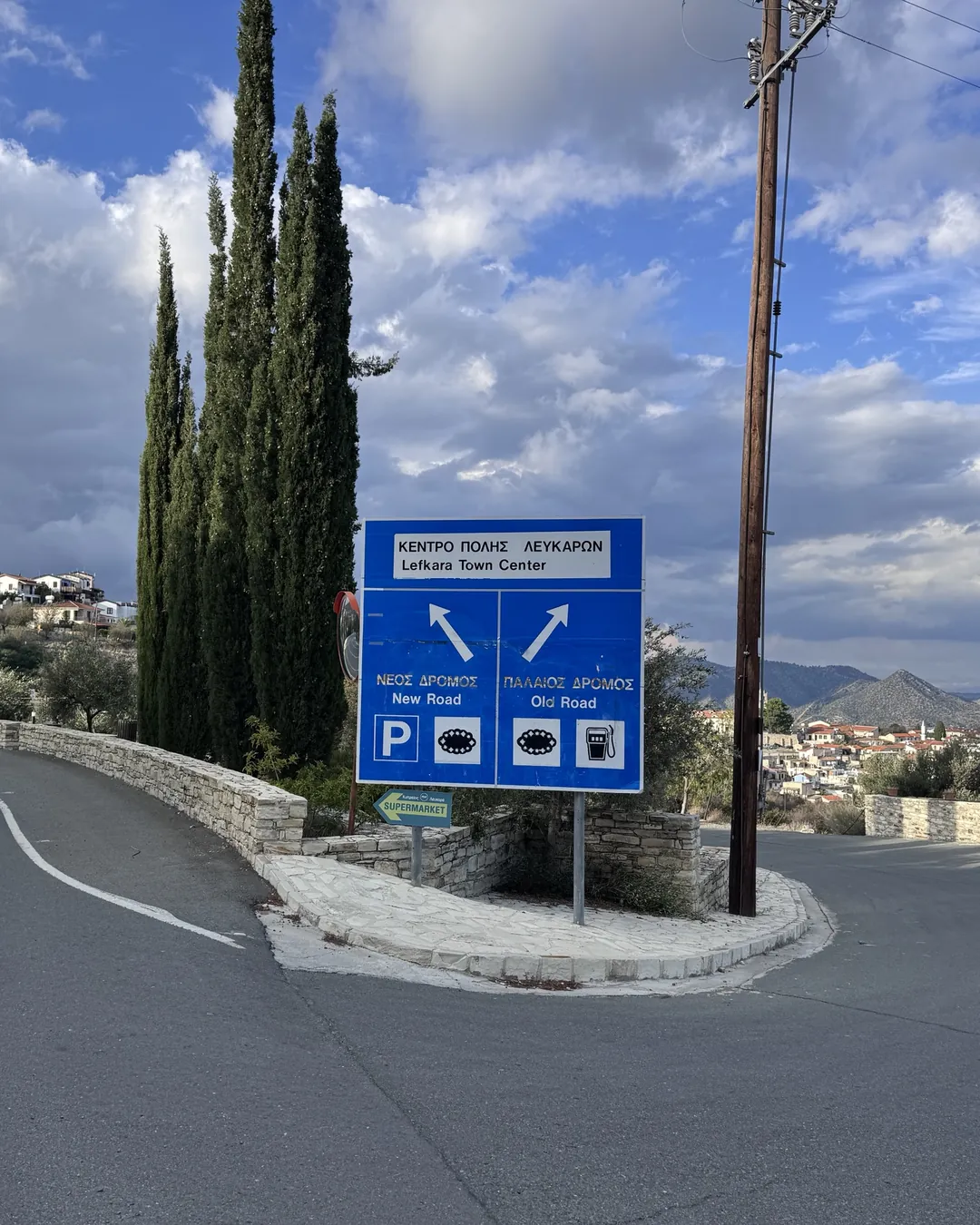
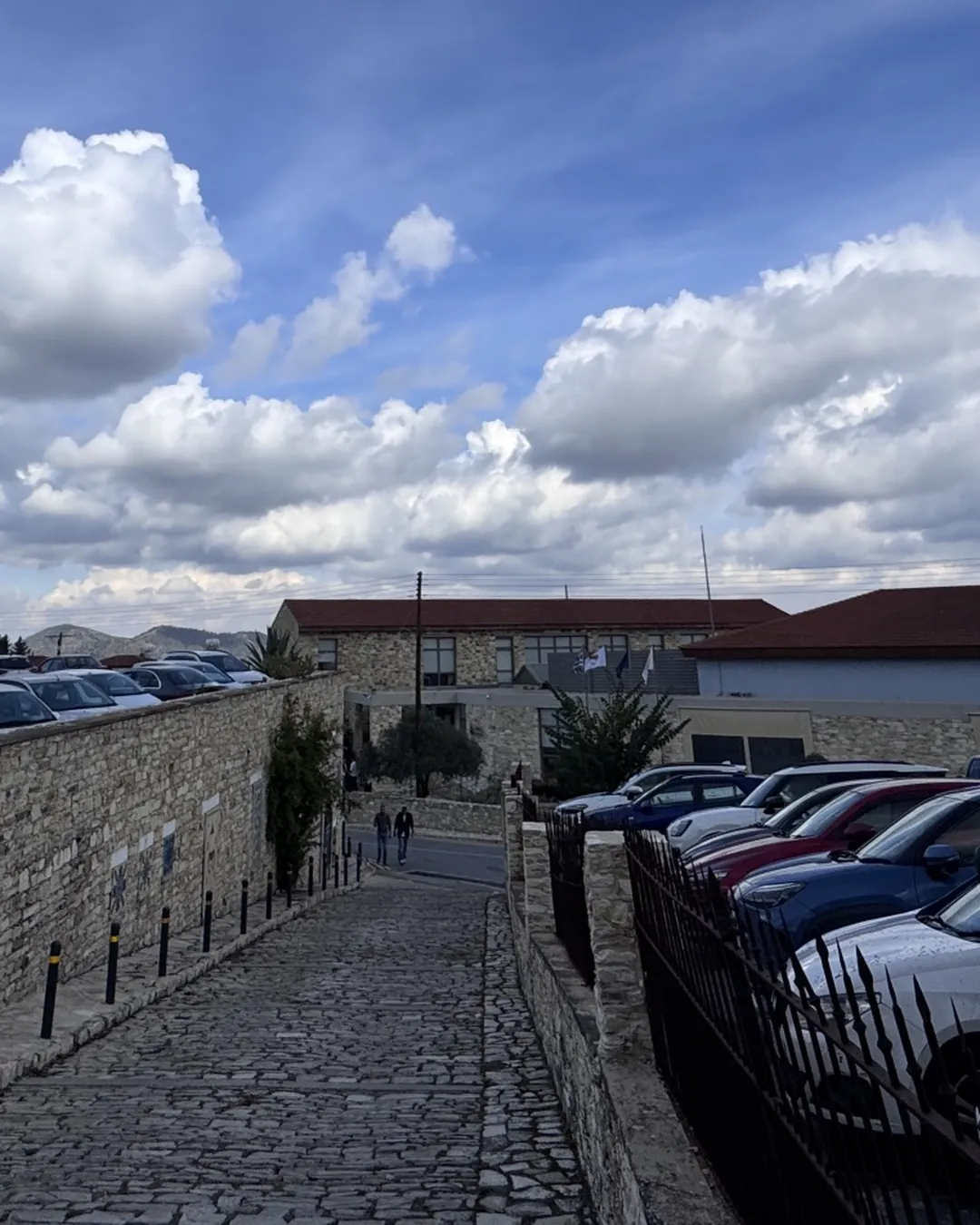
From Protaras it took us 1 hour 5 minutes via the A3, and the road was easy all the way. From Larnaca it is about 40 km, roughly 30 to 40 minutes. In the village there are two free car parks just above the town hall. They had plenty of cars, but we found a space without trouble. Signs at the entrance split into “New Road” and “Old Road”, with parking marked on the New Road side. From the car park it is a short walk down into the lanes.
Without a car it is harder. There is no direct bus from Ayia Napa, and the village bus lines run only a few times a day, so a rental car is the realistic choice.
Our five hours in order
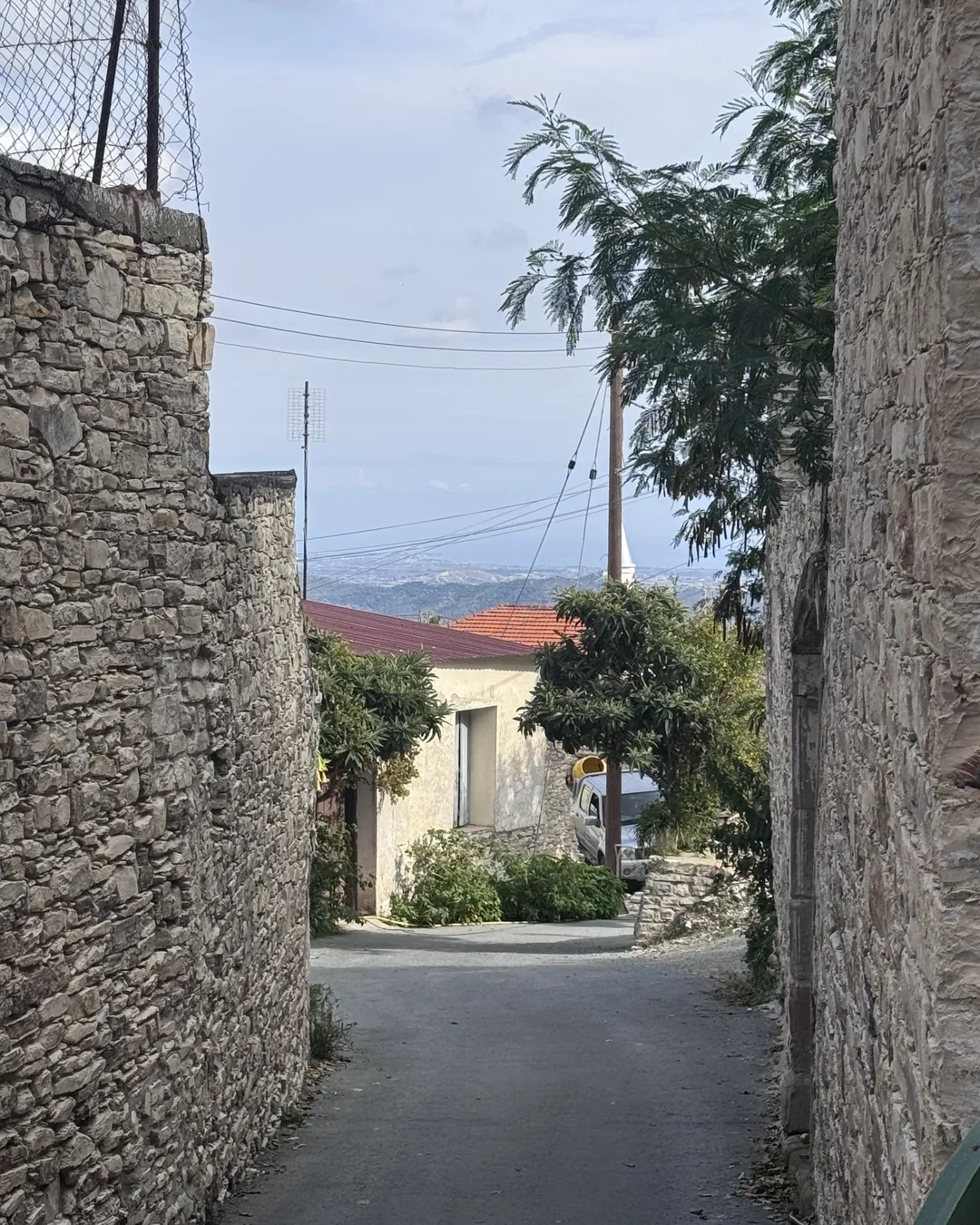
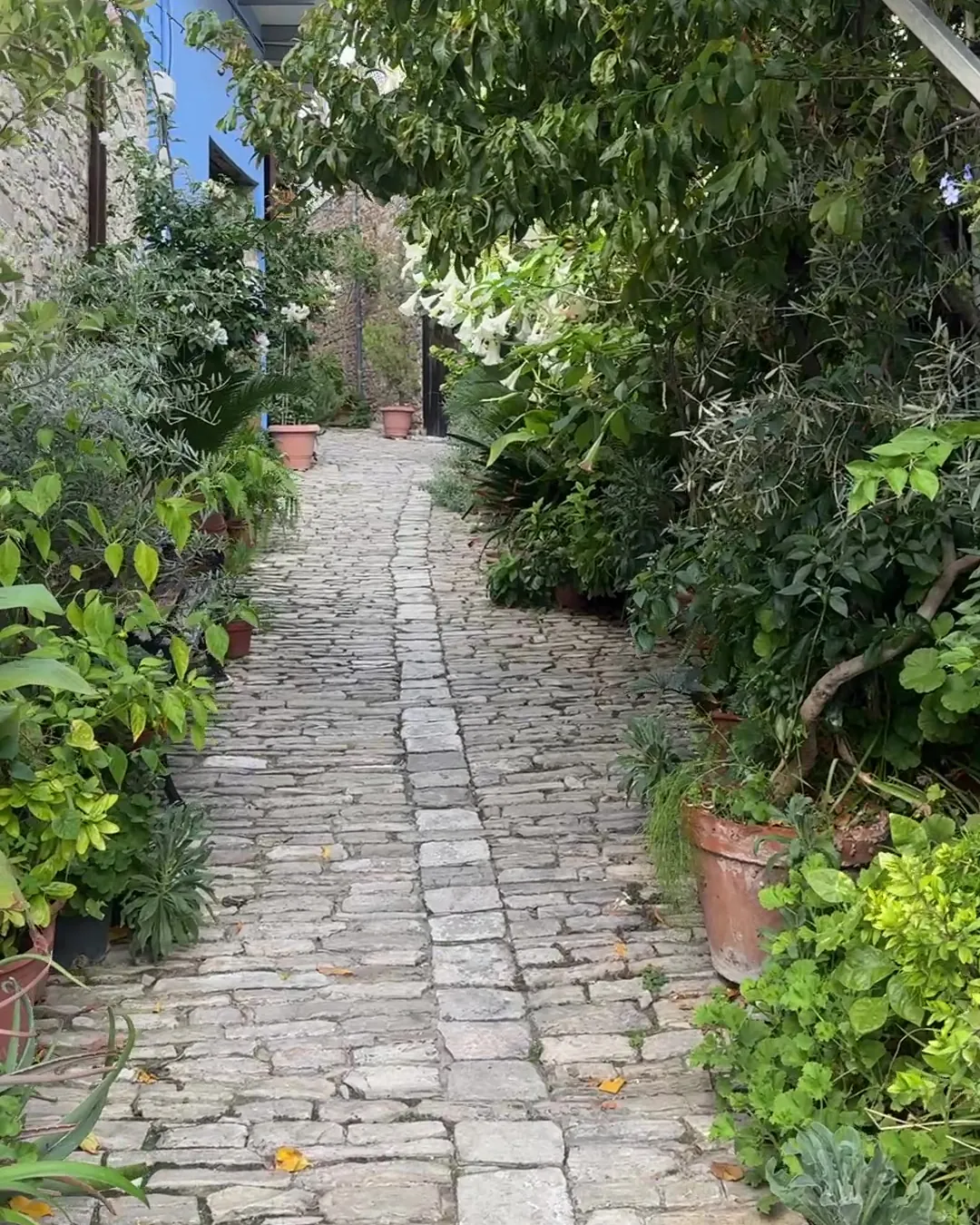
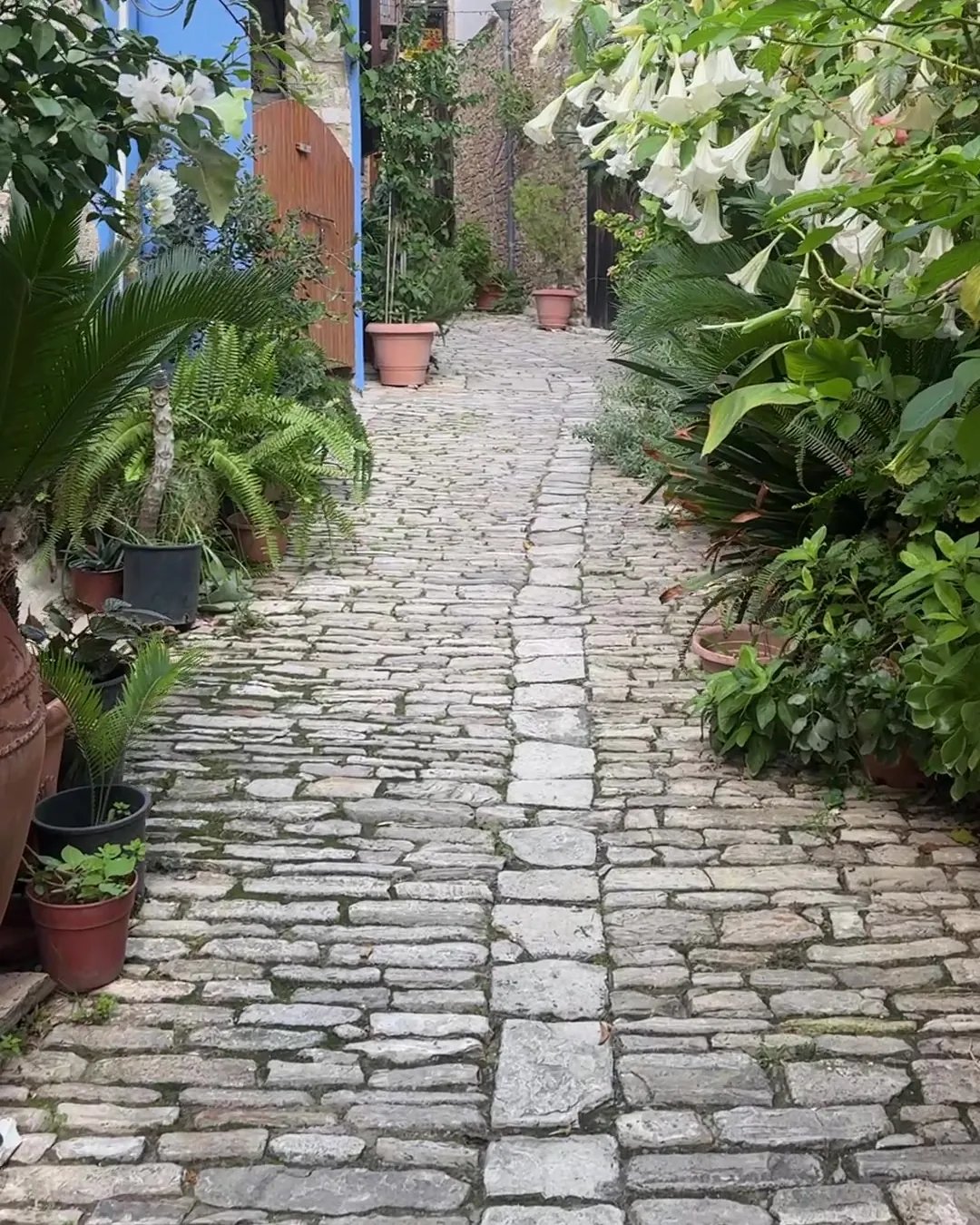
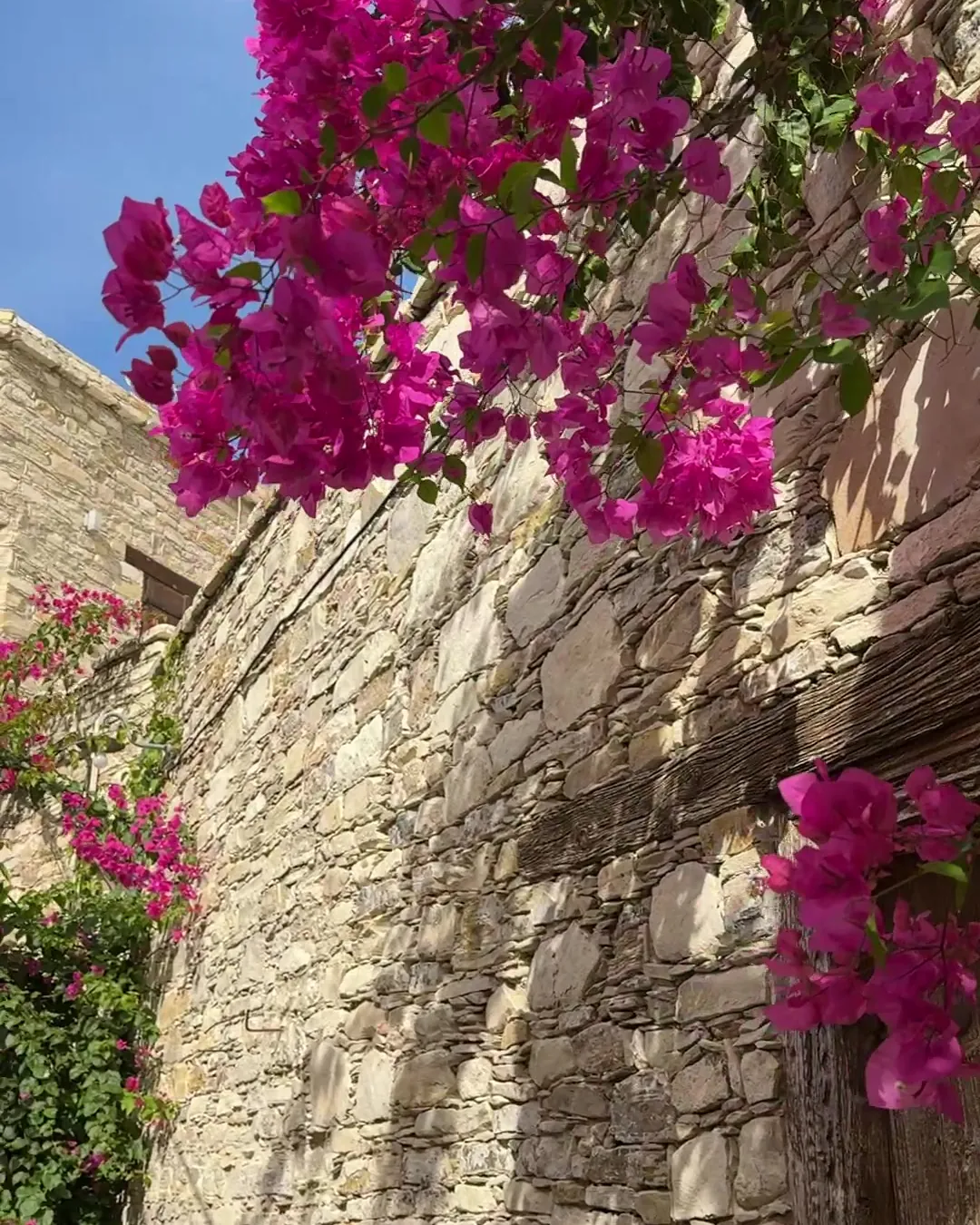
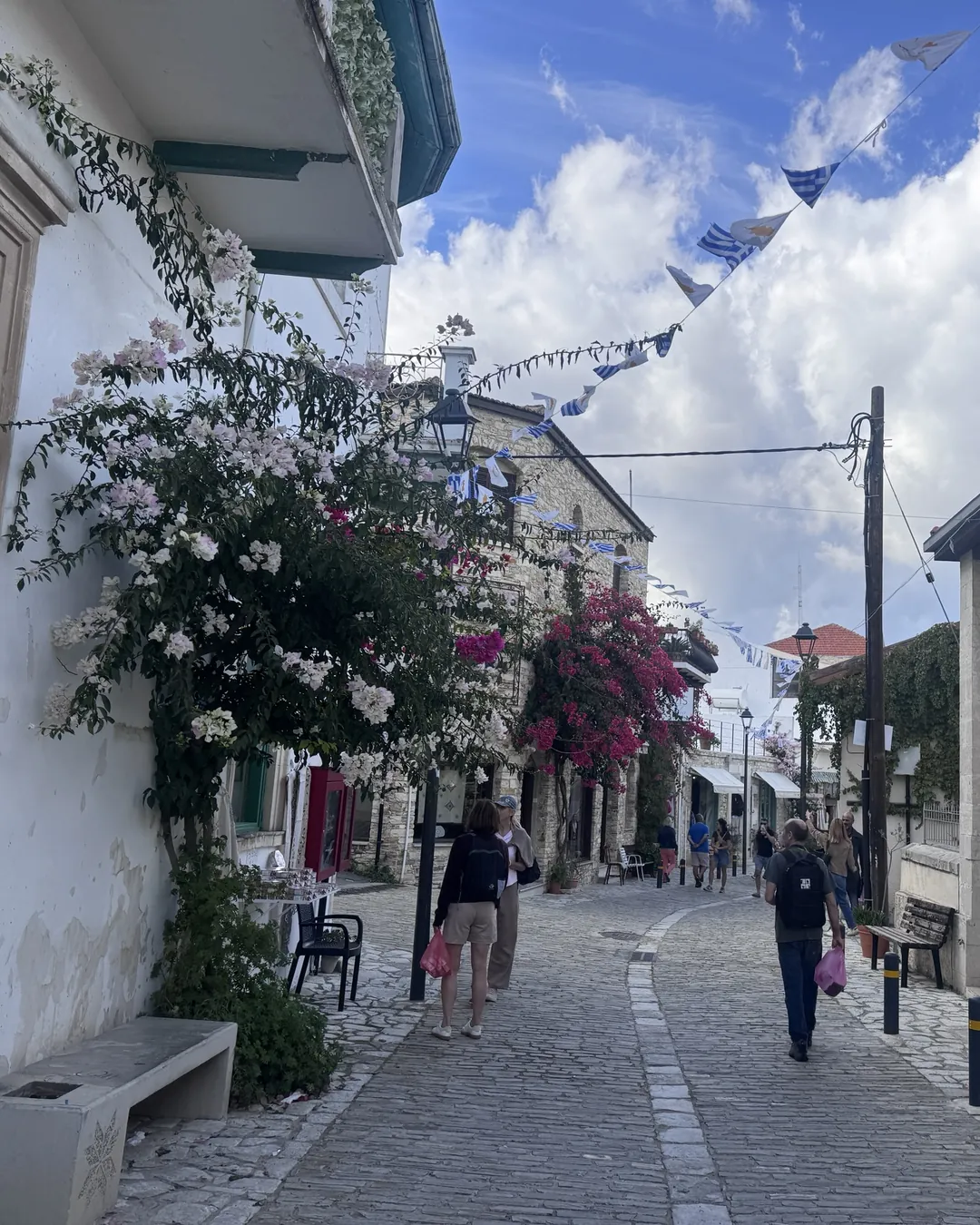
We began slowly, with no plan beyond the lanes. They are paved in stone, the walls spill over with bougainvillea, and the old houses have become small shops and cafes. It was the first days of November, cool enough for a light jacket. The Christmas stalls were just going up and still shut, yet the village was far from empty: there were younger people about, not only visitors and elderly residents. We lingered over the lace and talked with Mrs Eleni (below), then wandered on until the smell of grilled meat led us to lunch. Afterwards we climbed up to the church for the view.
Lefkaritika: the lace, and a last generation
Lefkaritika is the white needlework of Lefkara. UNESCO added it to its list of the intangible cultural heritage of humanity in 2009. The women who make it are called ploumarisses. Men from the village, known as kentitarides, once carried the lace across Europe to sell.
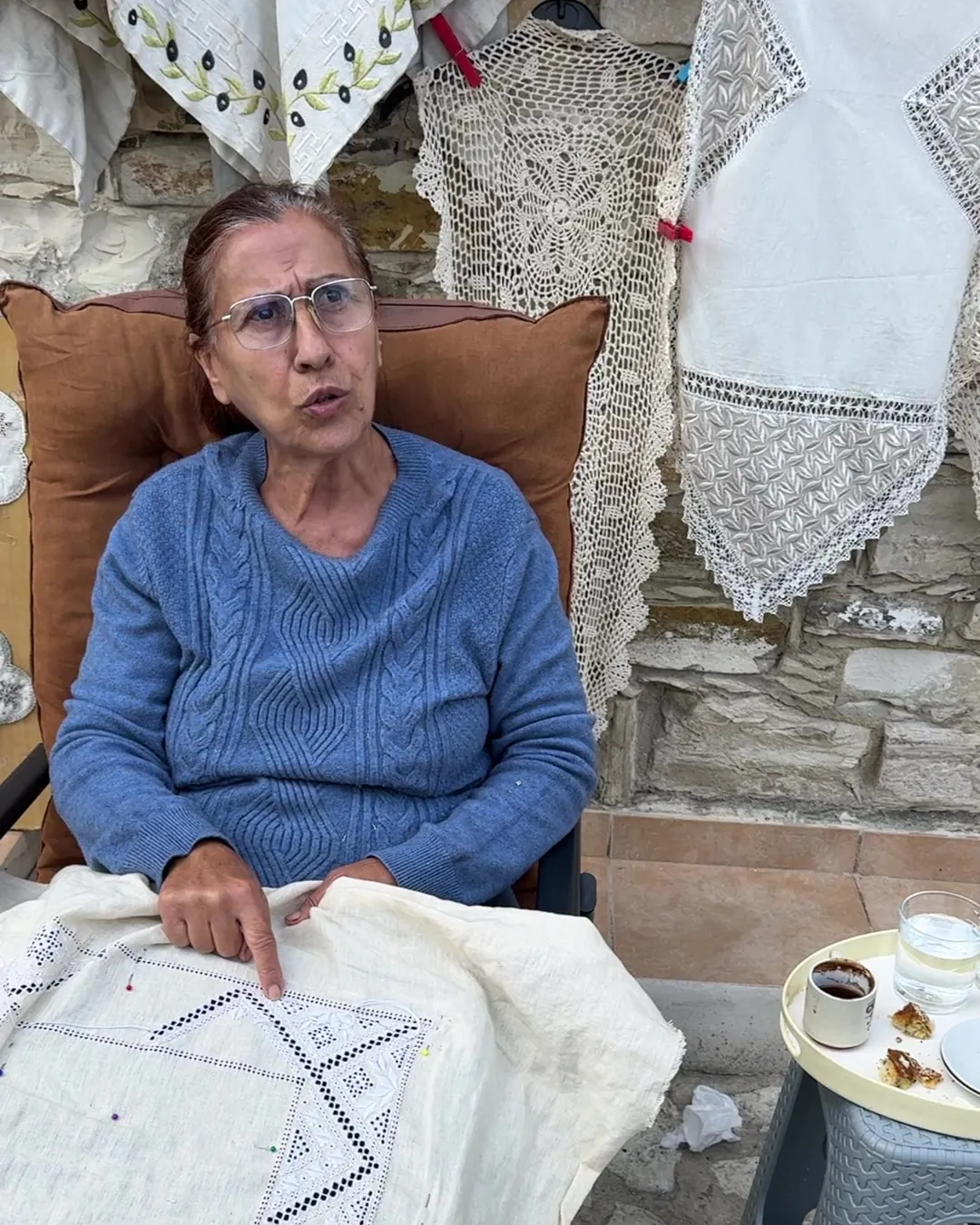
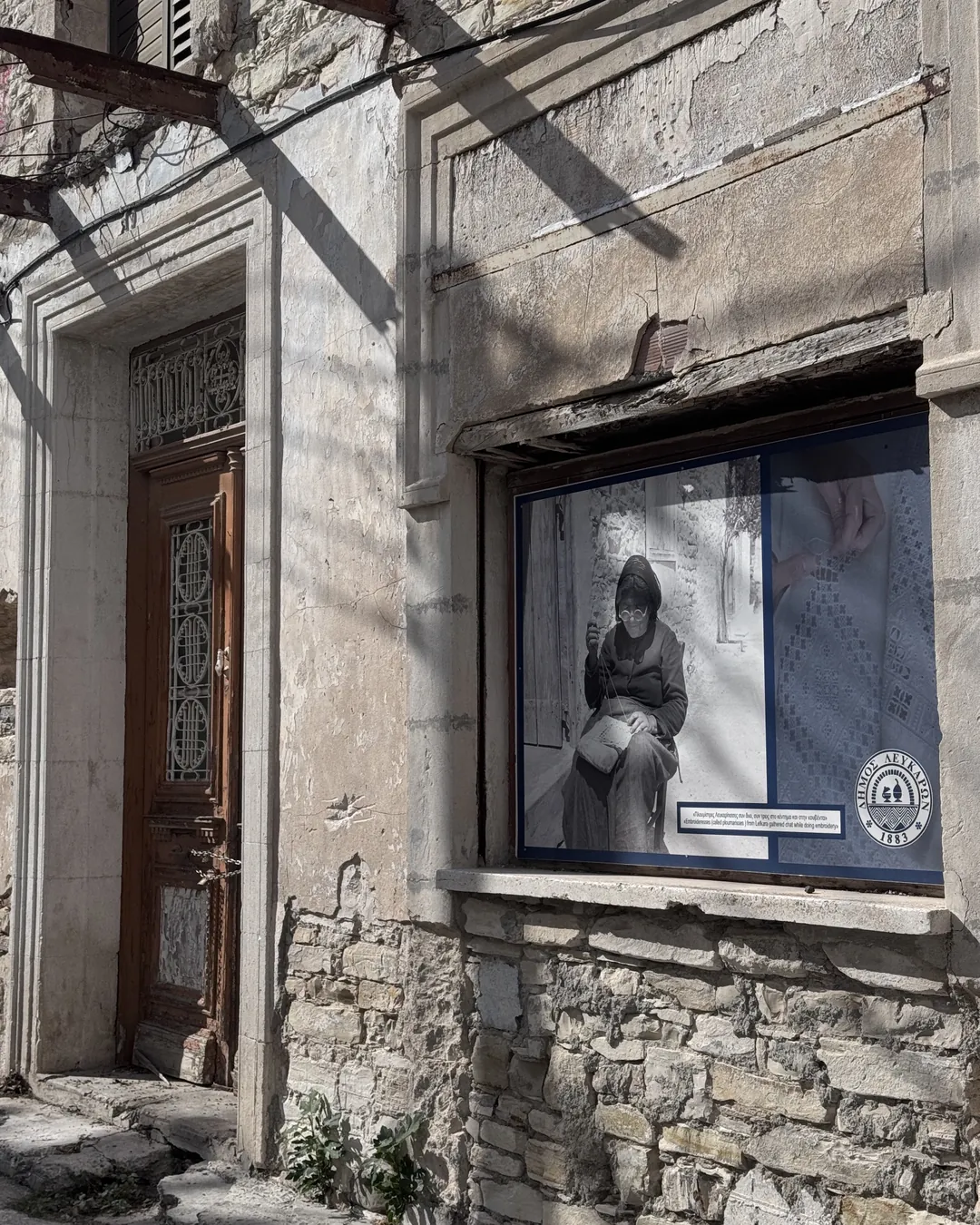
We spent a few minutes with Mrs Eleni, who was embroidering outside her shop. She told us about the pattern she was working on, the “potamos”, which is also called “Leonardo da Vinci”. The legend says Leonardo visited Lefkara in the 15th century, bought a tablecloth, and took it to the Duomo in Milan for the main altar. The village tells the story with love, but there is no firm documentary proof, so we treat it as a legend. She added that in 1986 the Municipality of Lefkara gave the cathedral a new tablecloth, made by women of the village.
What stayed with us most is what she said about the craft itself. She learned it from her mother and grandmother, who embroidered with other women in the neighbourhood, chatting as they worked. She told us she is, sadly, the last generation that does it. That is a good reason to buy with intention.
Handmade, or a ready-made kit?
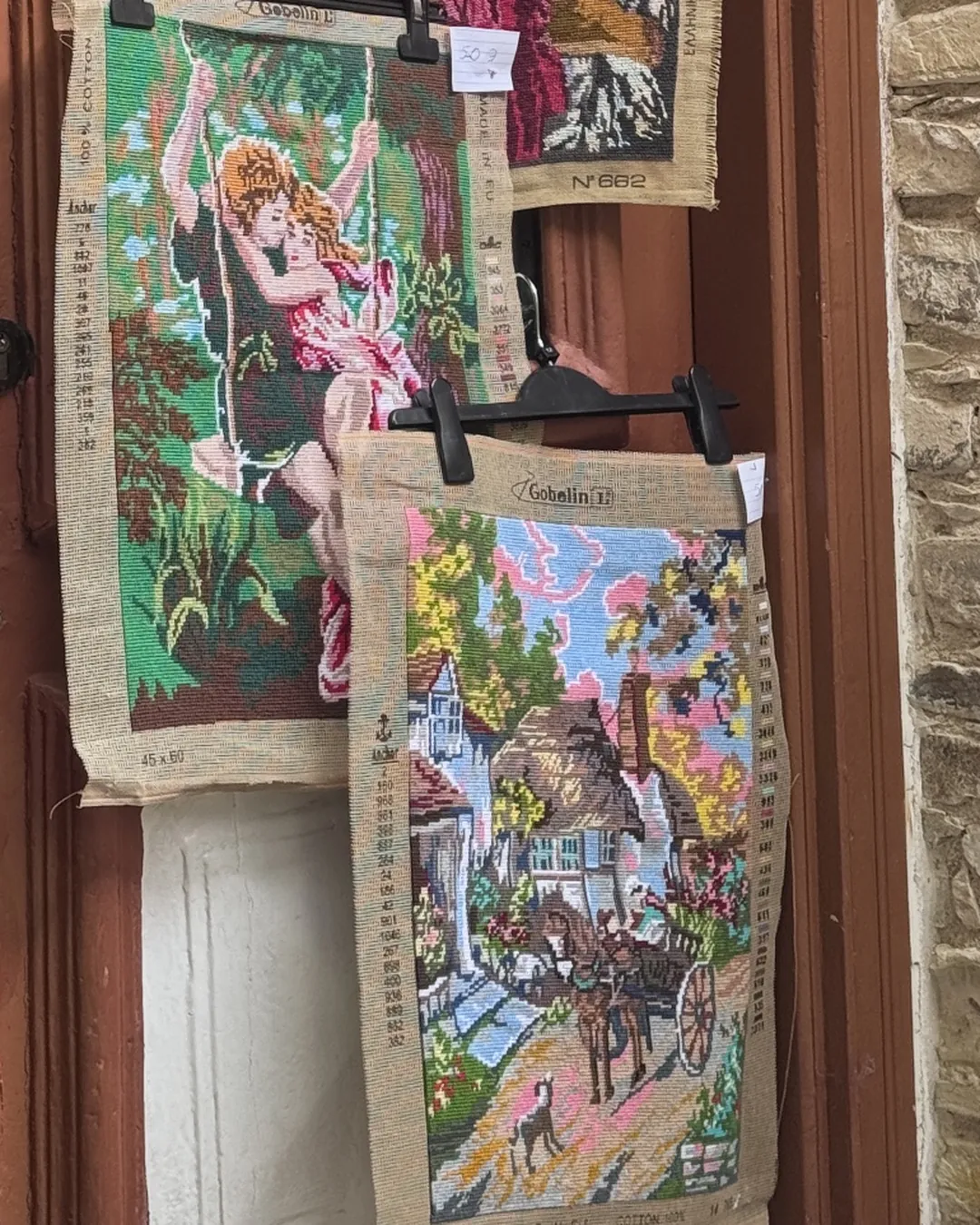
Not everything hanging by a doorway is Lefkaritika. At one door we saw tapestries in bright colours, with figures and landscapes, on printed canvases marked “Made in EU”. Those are ready-made kits, and they are a different thing from the white, geometric needlework you see the women making. If you want the real thing, ask the seller who made the piece and how long it took, and compare it with what the women outside are stitching. We did not buy lace on this trip, so we cannot tell you prices.
Where we ate: Iason
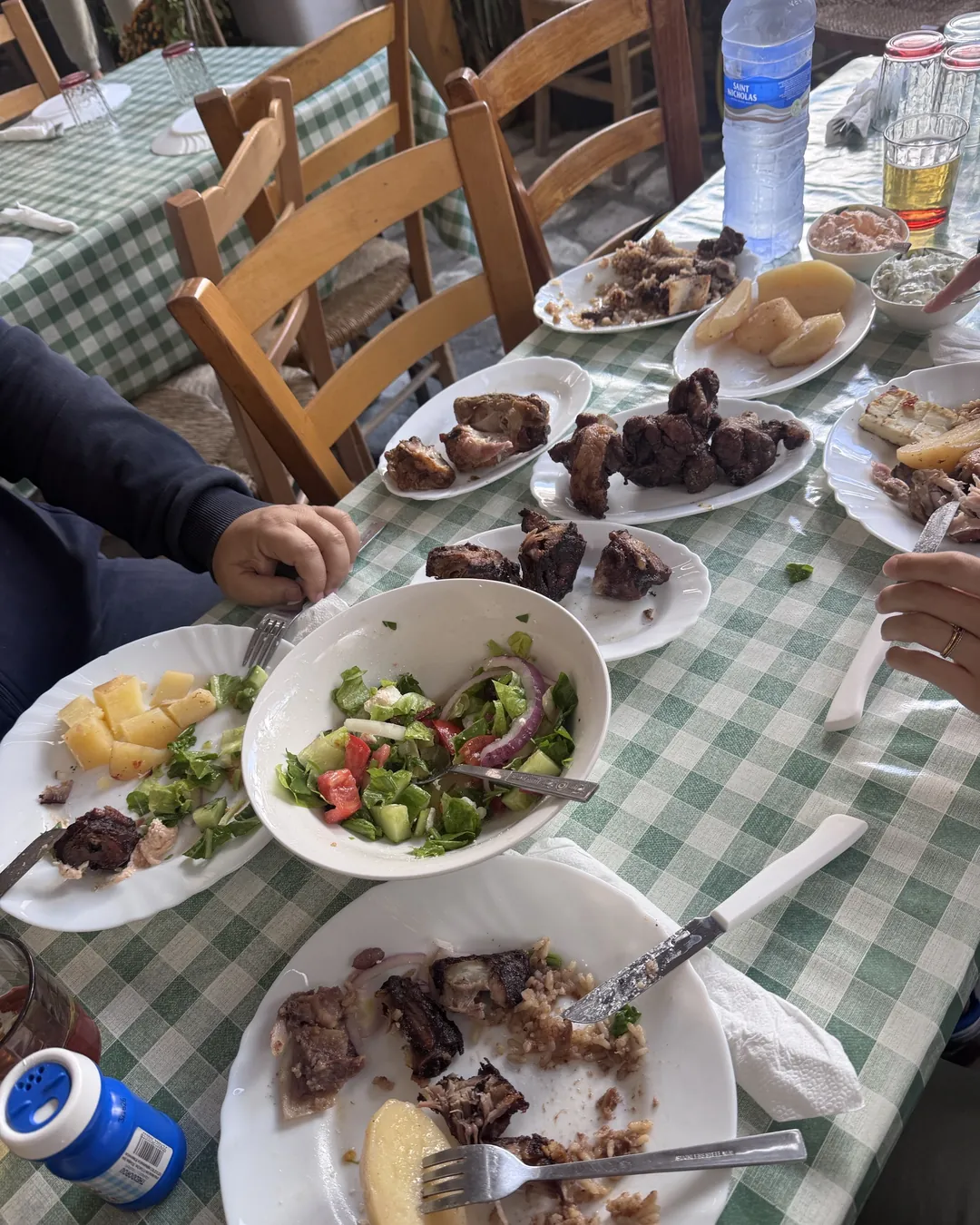
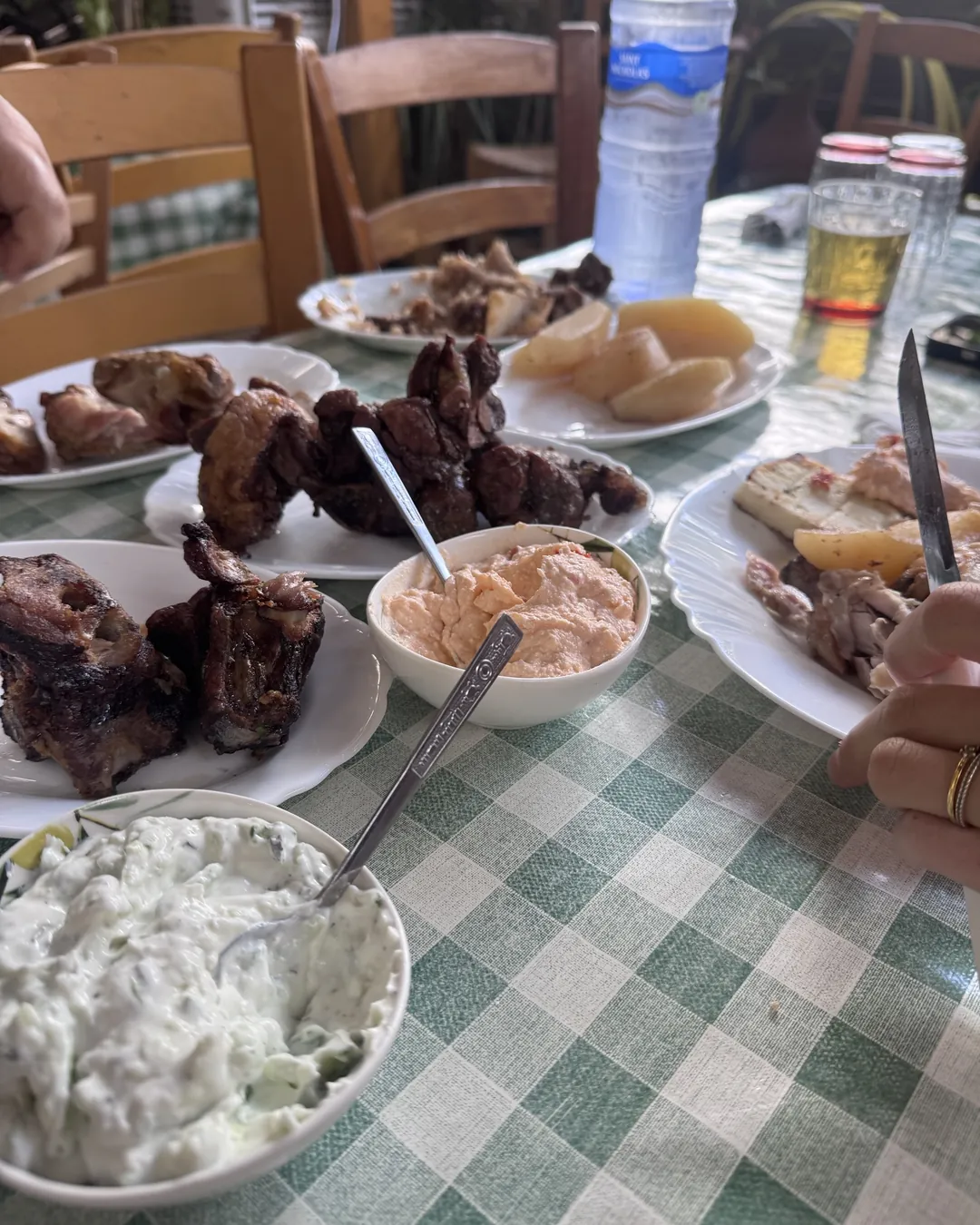
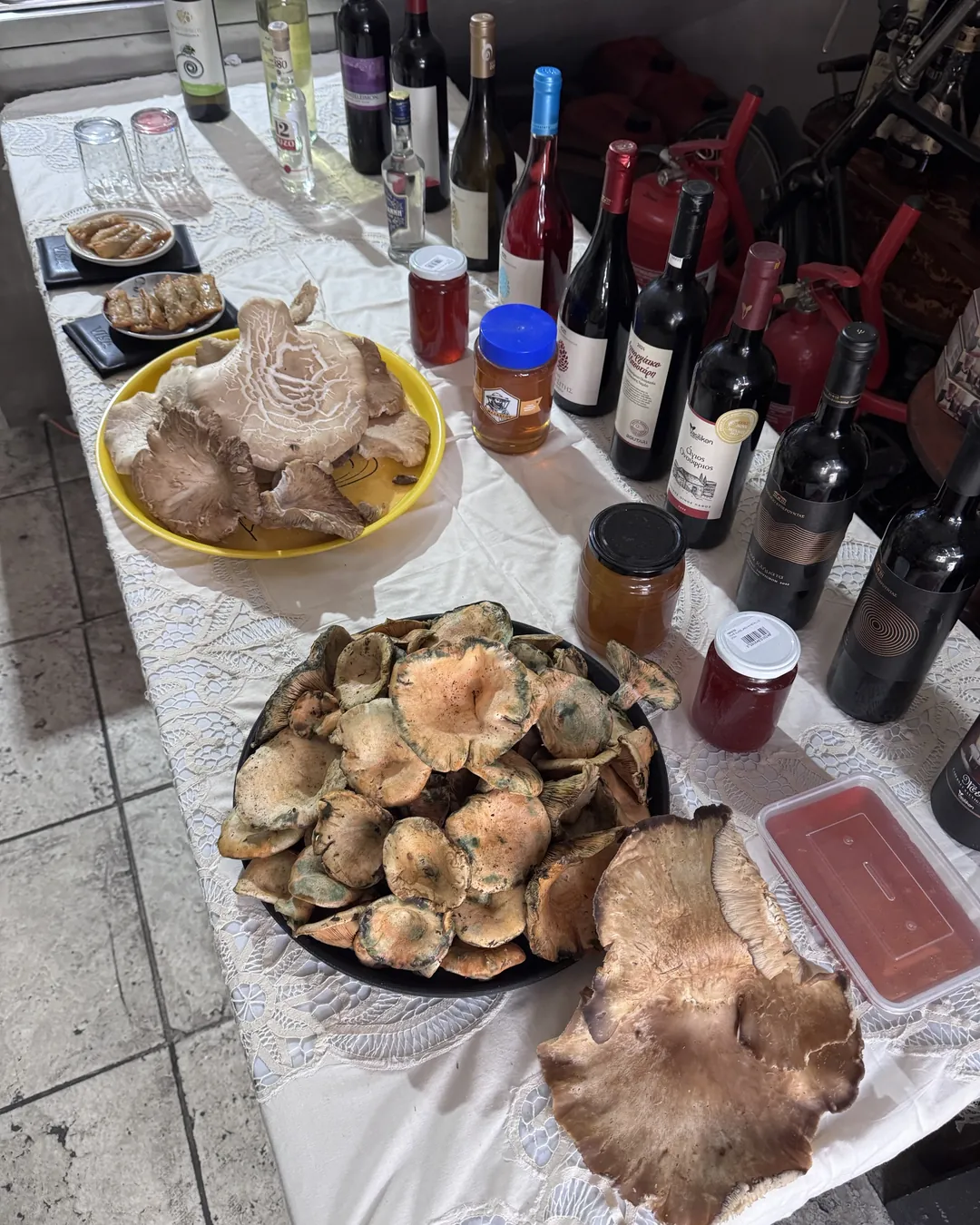
We smelled the grill before we found the taverna, walked in through the kitchen by mistake, and were sent round to the entrance. We promised to come back, and we did. Grilled chicken, pork and lamb chops, halloumi, potatoes, salads and dips came to about €25 per person with drinks, for three of us. We paid for everything ourselves. We chatted with the owner’s son, and the family gave us some peppers from their garden at the end. On display we also saw fresh mushrooms, honey and local wines for sale.
The village church
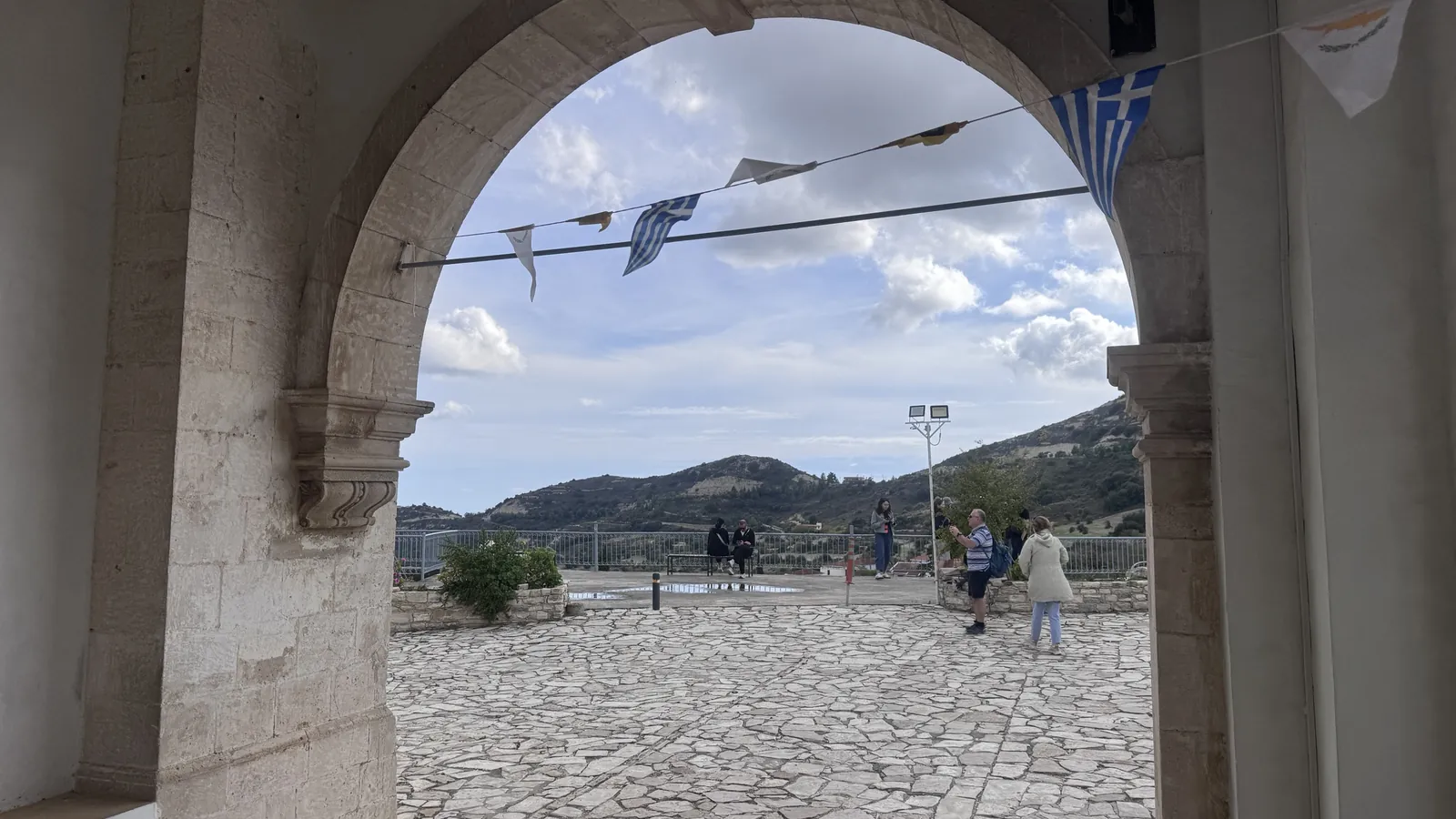
The church of the Holy Cross (Timiou Stavrou) in Pano Lefkara sits at the top of the village, with a terrace and benches that look out over the hills. The information board at the entrance says it was built in the 14th century, and, according to local tradition, it keeps a piece of the Holy Cross. It is worth going up for the view, even if you do not go inside.
Lefkara in November
Bring a light jacket or a fleece for your shoulders. The weather changed between cloud and sun, and some stalls were closed, but the cafes, the lace sellers and the tavernas were open. It was a calm time to visit, with room to walk and talk.
What it cost us
- Parking: free, in the car parks above the town hall.
- Lunch: about €25 per person with drinks, for three of us.
- Lace: we did not buy any, so we cannot give prices.
Honest notes
We went on one day in early November and did not visit any museums or workshops, so we cannot tell you their opening hours or entry prices. The lanes are cobbled and sloping, so wear comfortable shoes. The village is small, and five hours was enough for us.
FAQ
Is Lefkara worth visiting?
Yes, if you like slow walks through stone lanes, craft and a good village lunch. It is not a village of big sights, so skip it if you want beaches or a long list of attractions.
How far is Lefkara from Protaras?
It took us 1 hour 5 minutes by car via the A3. From Larnaca it is about 40 km, roughly 30 to 40 minutes.
Is there free parking in Lefkara?
Where we parked, yes. There are two free car parks just above the town hall, and we found a space without trouble.
Do I need a car to visit Lefkara?
In practice, yes. There is no direct bus from Ayia Napa, and the village bus lines run only a few times a day.
How long should I spend in Lefkara?
We spent about five hours, which was enough for a slow walk, a talk with a lace maker and a long lunch.
Is the Leonardo da Vinci story true?
It is a legend. The village tells it with pride and a lace pattern carries his name, but there is no firm documentary proof.
What is Lefkaritika lace?
It is the white needlework of Lefkara, made by women called ploumarisses. UNESCO added it to its list of the intangible cultural heritage of humanity in 2009.
Lefkara is about 40 km from Larnaca, and the day is much easier with a car.
Compare car hire options→What comes next
Planning more of Cyprus and Greece after the crowds? See all our Cyprus guides, or read how we label every place in Hotel Insider Reviews. Our label for this visit is Visited and Tasted.
Updated November 2026. Photos: Greecyz.
The places we would send our own friends.
So here is one email a month: where we’d stay, and where we wouldn’t.
By subscribing you agree to our Privacy Policy. Unsubscribe anytime.